Ready to elevate your marketing game with Influencer Marketing?
Our team of experts will be happy to show you our influencer platform in action and discuss your individual needs and aspirations.



Flying Tiger Copenhagen proved that the best brand collaborations are not designed, they are discovered. By partnering with RuPaul’s Drag Race and building from the inside out, the Danish retailer turned shared values into a sell-out campaign, cultural cachet, and a blueprint for community-first influence.

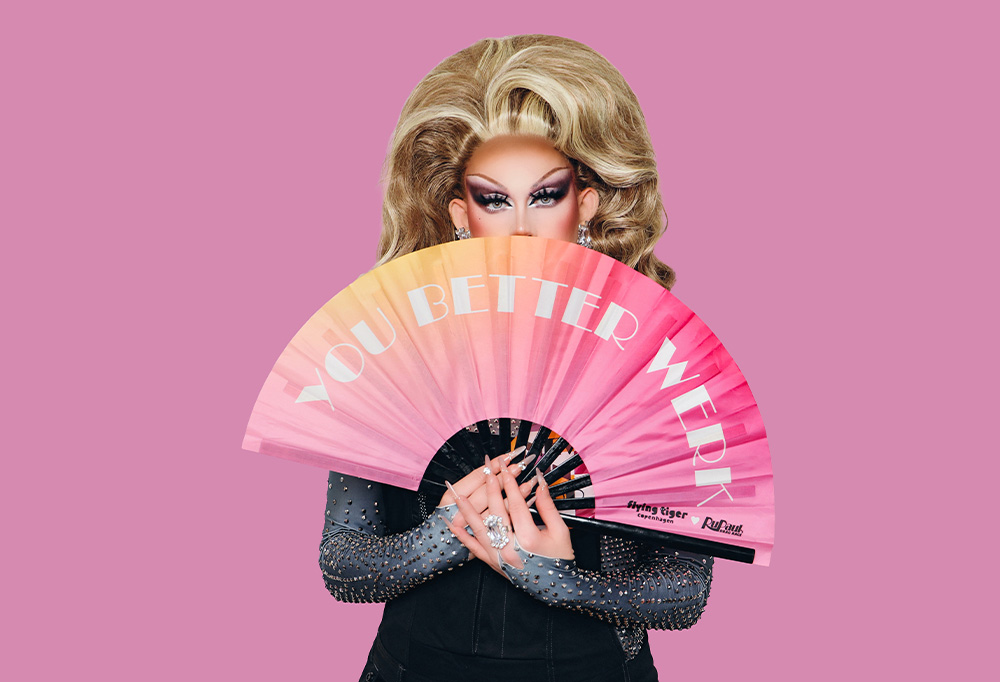
Founded in Copenhagen in 1995, Flying Tiger Copenhagen is a Danish variety retailer with more than 1,100 stores across 44 countries, from Europe and Asia to a newly opened presence in Canada. The brand is built on a simple but compelling idea: make the everyday a little bit extraordinary. Think poop-shaped board games next to beautifully designed stationery, novelty lamps next to party kits. Playful, accessible, a little unexpected.
Influencer marketing is central to how Flying Tiger Copenhagen brings that spirit to life. Rather than pushing products, the brand uses creators to show how those products slot into real, everyday moments.
“Influencers really create a relevance and connection to the brand,” says Lea Ellul-Terranella, Social Media Specialist at Flying Tiger Copenhagen. “We want influencers to help us shape how our brand is experienced in everyday settings.”
The concept of the RuPaul’s Drag Race collaboration was ambitious from the outset. Flying Tiger Copenhagen wanted to build brand awareness rooted in its core values of inclusivity and diversity, but this time through a co-branded campaign that felt genuinely culturally significant rather than opportunistic.
The collaboration was also new territory. “We really wanted to create a Flying Tiger extravaganza,” says Lea. “We really wanted to move into trying collabs. It’s new for us to do co-ops like this, at least on the marketing side.”
The brief was pointed: reach the hardcore RuPaul’s Drag Race fan base while also welcoming newcomers into the fold.
RuPaul’s Drag Race is built on creativity, self-expression, camp, and joy. So is Flying Tiger Copenhagen. When the brief arrived, the match felt obvious.
“For us it wasn’t like a campaign,” says Lea. “It was a quite natural fit, as we share the same values.”
Flying Tiger built the campaign around four phases: pre-teasing, teasing, launch, and post-launch. Each served a distinct function in the audience journey.
The pre-teasing phase was built entirely for fans who were already in the know. Cryptic graphics featured phrases from the show. If you recognised them, you knew something was coming. The teasing phase announced the collaboration without revealing products. The launch phase brought the full collection into view. And the post-launch phase shifted focus outward, inviting everyday shoppers who had never watched a single episode of the show.
The campaign ran across every available channel simultaneously: paid social, organic social, email, the customer club app, e-commerce, and even a bespoke drag personality quiz on the website, built in collaboration with the campaign’s anchor creator.
A single design element tied it all together. The product packaging featured a bold colour gradient, and that same gradient appeared across every piece of content, every in-store folio, and every digital banner. Visual coherence across a very large and varied campaign.
The most structurally significant decision Flying Tiger Copenhagen made was to bring in a drag queen from the very beginning, not as a spokesperson, but as a co-architect of the campaign.
Annie Rection, a Danish drag queen, was signed before any campaign assets were produced. Her role quickly evolved from content creator to campaign ambassador. She consulted on the drag quiz, connected products to personality types, appeared on the website during the product purchase journey, and was central to all three early campaign phases.
The reasoning was pragmatic and smart. “We are not in tune with that community on a daily basis,” Lea explains. “So what is happening in the drag community, what are they talking about, what do they care about, all of these essential things, I don’t know that on a daily basis because that’s not where I am daily. So we really wanted to bring in a drag queen that has this touch point.”
Annie Rection’s content was produced in a language-neutral format, designed to travel across all markets. To complement this, Flying Tiger Copenhagen briefed four key local markets, the UK, France, Italy, and Spain, each of which has its own RuPaul’s Drag Race franchise, to source local creator partnerships.
Priority one was drag queens from those local franchises, with a preference for comedy or camp queens whose energy aligned with the brand’s playful spirit. Priority two was creators who are openly part of the LGBTQIA+ community. “It didn’t make sense for us to go out and make a big campaign with anyone who was not from the community,” says Lea, “because this was about celebrating that.”
With local teams across four markets shortlisting creators independently, Flying Tiger Copenhagen needed a consistent framework for validating those choices. That’s where Kolsquare came in.
Each local team used Kolsquare to assess shortlisted creators across three core dimensions: credibility score, engagement rate, and audience location. Given that the campaign’s entire premise rested on brand awareness and cultural credibility, the credibility score was particularly important.
“We wanted a high credibility score as this full campaign was about brand awareness,” Lea explains. “If we went with a low credibility score, that could also hurt that part of it for us.”
Audience location filtering was equally critical. Annie Rection’s content was designed for global reach. But the local creator activations needed to hit specific national audiences.
“Kolsquare’s location data allowed each market team to confirm that their chosen creators were speaking to a genuinely local audience rather than a broad international one,” comments Lea. “That’s a really valuable insight.”
Post-campaign, Kolsquare’s sentiment analysis tool gave Flying Tiger Copenhagen a real read on community response. The campaign averaged a sentiment score of 75 out of 100 on Kolsquare, placing it firmly in positive territory. For a brand engaging a fan base as vocal and discerning as RuPaul’s, that score carried real weight.
“I’m pretty sure they would have told us if they were not happy,” says Lea. “They’re a very vocal fan base. They would have turned on us quite fast if we didn’t do it right.”
Kolsquare also enabled the team to track dedicated mentions and UGC volume throughout the campaign, feeding one of Flying Tiger Copenhagen’s most important performance signals.
The numbers tell a clear story. The campaign generated €357K in EMV, 41 pieces of influencer content, over 80 dedicated brand mentions, and a 4.1% engagement rate. But the signal that mattered most to the team was what happened on the day of launch.
Hero products sold out on the e-commerce site within 24 hours. It was the first time any Flying Tiger Copenhagen collection had achieved that. Sales exceeded the forecast from day one. And five weeks after launch, RuPaul’s Drag Race, the lipstick lamp, and the disco ball were still ranking among the top search terms on the Flying Tiger Copenhagen website.
Attribution was not straightforward. The campaign did not use promo codes. Instead, Flying Tiger Copenhagen tracked a blend of signals: notify-me sign-ups from newsletters and QR codes, e-commerce sell-through rates, sales forecast performance, and on-site search behaviour. Together, these told the story of demand that had been generated well before the products hit shelves.
Then there was the community effect. Drag queens from the show flooded the comment sections across all four markets, many of them unprompted. DMs arrived from performers asking if they could film in stores, without any payment. “For us that really just showed that there was maybe also just a need, like a need for this to be seen and heard,” says Lea.
UGC confirmed that both target audiences had been reached. The LGBTQIA+ and drag community showed up with strong engagement and fan-facing commentary. Organic buzz from newcomers centred around the disco ball and the lipstick lamp, two of the three hero products Flying Tiger Copenhagen pushed hardest in the post-launch phase.
Asked what she would change if running the campaign again, Lea’s answer was direct: more markets, more micro influencers, and even less branded content.
“We definitely could have added more active countries,” she says. “We would have loved to bring in the Nordics and Poland as well. We had a very positive turnout there. Maybe we should have gone even more into the smaller markets.”
The other reflection was on content: more generic lifestyle content for paid channels, to balance the niche-but-brilliant drag-forward creative that, while highly effective organically, was too specific for broad paid targeting. And perhaps most tellingly, even more creative freedom for Annie Rection. “I wish we had kind of just run with” the more spontaneous B-roll content, she says, “where she’s interacting with the lipstick lamp in a very funny way. I wanted to go even more extravaganza.”
Want to build a campaign with this kind of cultural clarity? Book a demo with Kolsquare and see how data can help you find the right creators, validate your choices, and measure what actually matters.
Your monthly dose of exclusive insights, strategies and trends shaping the creator economy. For insiders, by insiders.
L’essentiel, directement dans votre boîte mail.
.webp)

%20(1)%20(1).png)



.webp)