Finding the right influencers has never been easier!
🚀 Save time with our innovative tool
🔍 Quickly identify the perfect influencers for your brand
📈 Maximize the impact of your influencer campaigns



Social media is now the second screen of the World Cup, where fans seek commentary, highlights, and player content. Football players become influencers, engaging fans and growing their online audiences during the tournament.
For brands, this opens up an engaging way to reach target markets without the high costs of traditional ads. The real opportunity isn't collaborations with the biggest names. It's tapping into breakout stars who are gaining serious momentum. Back one early, and you’ll access a level of fan interest few sponsorships can buy.
But who's worth partnering with? You need actionable data to decide. In this article, we’ll break down how to identify, evaluate and activate the right players for your market and budget.
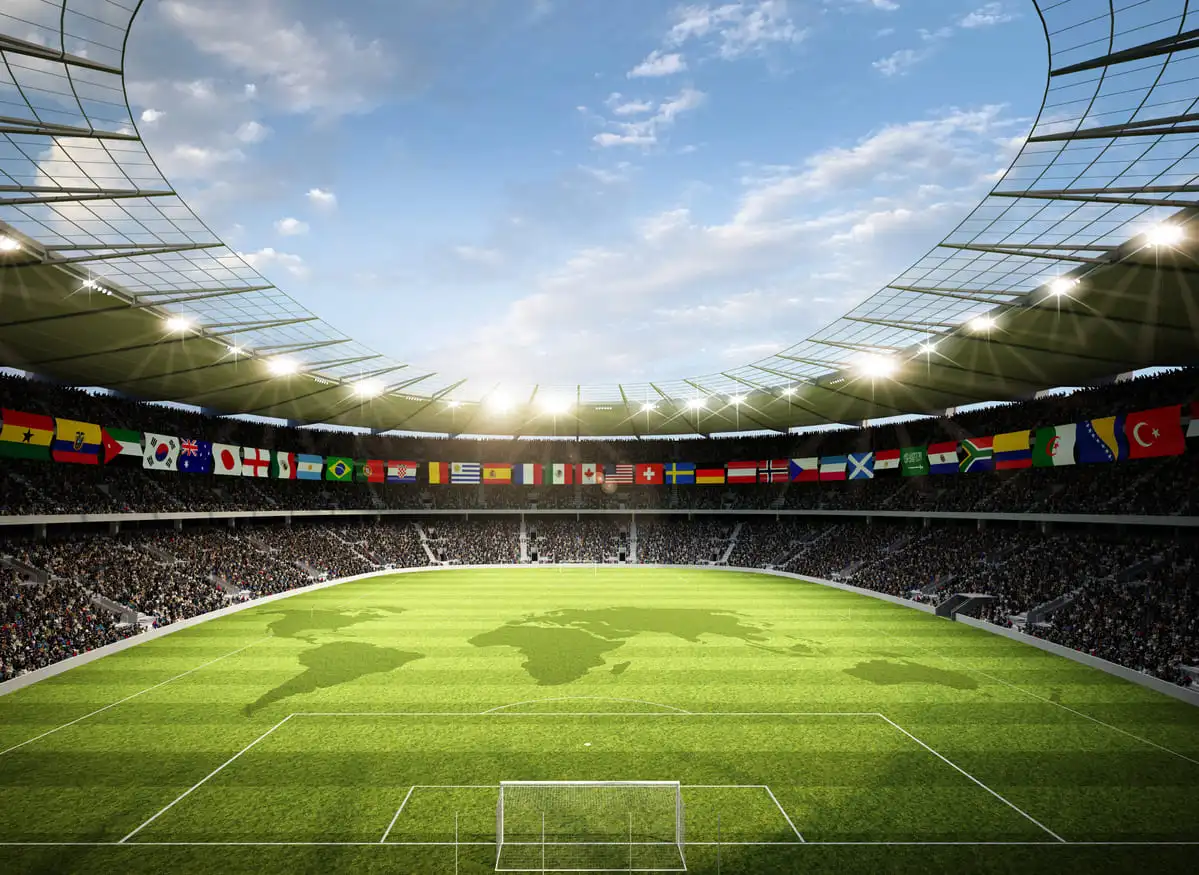
When you think of the world’s biggest publishers, you probably don’t think of footballers. But Ronaldo's 665M Instagram followers beat the audience of any single TV network. And combined, this year's players have over 3bn Instagram followers—the largest aggregated influencer audience for a single event.
Traditional half-time ads still matter, but fans are now watching and scrolling. Over half (58%) of sports fans cite social media as a top channel for discovering additional sports content, and three in four UK Gen Z fans (74%) say they're likely to reach for their phone during the tournament's water breaks.
Social media creates pockets of culture, humour, and hype. And with this year’s longer tournament, there’s more space for both established and breakout players to shine.
Here’s why footballers work as powerful influencers:
There are World Cup players who fit into every influencer category, from micro to mega. While follower count is often considered a vanity metric, it does provide insight into how a creator connects with their audience and how much brand deals would cost.
Want to find out how much a specific influencer costs for collaborations? Use the Kolculator for Instagram or TikTok. Just click, input the influencer’s handle, and generate expected collaboration costs based on insights from Kolsquare’s database.
At the mid-tier or breakout levels, data, speed and accuracy matter more than budget. An influencer marketing platform like Kolsquare gives you a competitive advantage to spot growth early.
Successful influencer campaigns rely on data from the first step. That’s the only way brands can determine whether a creator can connect with their target market.
Track the following metrics for your influencer campaign:
If you base your influencer selection on data, you can trust creators to develop content that speaks to your target market. But how do you obtain this data?
Here’s a step-by-step guide on how to find your best-fit influencers using Kolsquare:
The World Cup’s breakout stars are gaining followers fast. This organic audience interest is a prime opportunity for brands.
Every year, players from smaller football nations, or young stars from major squads, experience extraordinary follower growth that temporarily, and sometimes permanently, elevates their influencer value.
This year, a top example is Vozinha, Cape Verde's goalkeeper. After keeping a clean sheet against Spain, his profile is rocketing. At the opening ceremony, he had just 33K Instagram followers. By the end of the first week, his follower count rose to 6.79M—a 20,000%+ increase. And he’s not the only one, Brazil's Endrick gained 1.46M followers in the same period.
Breakout players’ popularity wasn’t curated; it was the organic spark of tournament football that engages a player with no agent, no brand deal and no management infrastructure. Audiences view these players as highly authentic. And once they break out, a collaboration would likely cost millions.
Brands that monitor player follower growth and engagement rates in real time during the tournament can identify and approach these players before prices rise. A player with 500K followers and a 15% engagement rate is often more commercially valuable than a player with 5M followers and a 0.8% rate.
The platform's Social Listening tool surfaces these trends in real time. By tracking follower growth spikes, engagement surges and EMV increases for any player profile, without waiting for post-campaign reports.
England's 2026 World Cup squad has over 100M Instagram followers, making the Three Lions one of the five most-followed national squads at the tournament. Jude Bellingham, England's most-followed player, has built one of European football's most commercially sophisticated personal brands since his move to Real Madrid.
The figures below are pulled directly from Kolsquare's platform.
Despite a lower follower count, Saka's audience is highly engaged with his content, and the most UK-concentrated of the four. Kane's audience is more globalised and the least engaged of the group, suggesting his reach is broad rather than deep. Rashford sits in the middle with a smaller UK base.
Depending on your budget and goals, your strategy should feature different player tiers to balance reach and engagement.
These elite partnerships are managed through global sports agencies, such as the CAA, WME, and Roc Nation. In this tier, lead times are 6 to 12 months. Most mid-market brands are not in this tier and do not need to be.
The alternative is to run brand-adjacent campaigns where you analyse the players' existing partner content. If your brand is in a category such as food, sportswear, or automotive, where mega-players post organically, Kolsquare's Social Listening can identify earned media value from organic mentions without incurring direct partnership costs.
Macro players like Bellingham, Yamal, Salah, and Vinicius Jr require outreach to go through agents and management intermediaries. Collaborations need detailed campaign briefs, planned content calendars and usage rights agreed in advance.
Brands should expect to give 3 to 6 months of lead time for a tournament campaign. Kolsquare's platform allows brands to identify these players, review their engagement data and audience demographics before approaching management. This means outreach is targeted and data-justified, not speculative.
Players like Rashford, Musiala, Wirtz, and Pedri are more commercially accessible and have stronger domestic market concentration.
Unilever's 'many-to-many' model applies here. The brand switched half of its marketing budget to social media marketing and built a portfolio of multiple mid-tier player partnerships, including influencers and players. This meant that it gained greater diversity and lower risk than a single mega-player deal. For example, a nutrition brand could activate 4-6 mid-tier squad players from different countries.
You can use Kolsquare to identify mid-tier players whose engagement rate significantly outperforms their follower count. These are the best-value partnerships at this tier.
These are the early plays. Here, there’s no need for prior brand relationships or expensive agency intermediaries. These players are often directly approachable through player social profiles or national federation contacts. Even a brief social mention from a player gaining 5M followers in a week delivers significant EMV at a fraction of the cost of activating a more established player.
The tricky part is that the window is short. Breakout players attract brand attention quickly once the follower spike is visible. To win, you need speed. Using Kolsquare's real-time monitoring lets you see who is gaining traction immediately.
Footballers are more than athletes. They're community builders and some of the most valuable influencers in the world right now. But reach alone won't tell you who's worth the investment.
The players worth watching aren't always the ones with the biggest following. Sometimes they're a mid-tier player who’s about to break out.
Kolsquare's platform gives you the data to spot opportunities early. You can track EMV, engagement rate, audience quality, and real-time growth all in one place. The brands that move fastest won't necessarily be the ones with the biggest budgets. They'll be the ones using data to identify the right player before everyone else does.
All players across the 48 competing national squads at the FIFA World Cup 2026 hold a combined estimated 3.39 billion Instagram followers. That’s the largest aggregated influencer audience ever assembled for a single sporting event.
The top five World Cup 2026 players by Instagram followers are:
Estimated post values vary depending on the player’s popularity. At the very top, Ronaldo would command around £5M for sponsored posts.
Mid-tier players with 7M-25M followers typically range from £5K to £50K per post, depending on audience engagement, exclusivity and usage rights.
Brands should have a clear strategy to avoid overspending, spot the opportunities that will get their brand noticed, and maintain authenticity.
This means brands should:
EMV estimates how much the buzz and organic conversation created around influencer content would have cost to generate through traditional digital marketing channels. Kolsquare's platform calculates EMV in real time, allowing brands to compare the organic content value of different players before committing to paid partnership costs.
The teams with the most followers are led by superstar players. For example, Ronaldo has 669M followers and Messi has 510M followers.
Kolsquare is Europe’s leading Influencer Marketing platform, offering a data-driven solution that empowers brands to scale their KOL (Key Opinion Leader) marketing strategies through authentic partnerships with top creators.
Kolsquare’s advanced technology helps marketing professionals seamlessly identify the best content creators by filtering their content and audience, while also enabling them to build, manage, and optimize campaigns from start to finish. This includes measuring results and benchmarking performance against competitors.
With a thriving global community of influencer marketing experts, Kolsquare serves hundreds of customers—including Coca-Cola, Netflix, Sony Music, Publicis, Sézane, Sephora, Lush, and Hermès—by leveraging the latest Big Data, AI, and Machine Learning technologies. Our platform taps into an extensive network of KOLs with more than 5,000 followers across 180 countries on Instagram, TikTok, Twitch, Facebook, YouTube, and Snapchat.
As a Certified B Corporation, Kolsquare leads the way in promoting Responsible Influence, championing transparency, ethical practices, and meaningful collaborations that inspire positive change.
Since October 2024, Kolsquare has become part of the Team.Blue group, one of the largest private tech companies in Europe, and a leading digital enabler for businesses and entrepreneurs across Europe. Team.Blue brings together over 60 successful brands in web hosting, domains, e-commerce, online compliance, lead generation, application solutions, and social media.
Your monthly dose of exclusive insights, strategies and trends shaping the creator economy. For insiders, by insiders.
L’essentiel, directement dans votre boîte mail.
.webp)


%20(1)%20(1).png)
.webp)


.webp)