The influencer marketing industry has spent years talking about brand safety. But as budgets grow and scrutiny increases, the question is no longer whether values matter, it's whether agencies and brands are genuinely building them into their processes, or whether they are simply paying lip service.
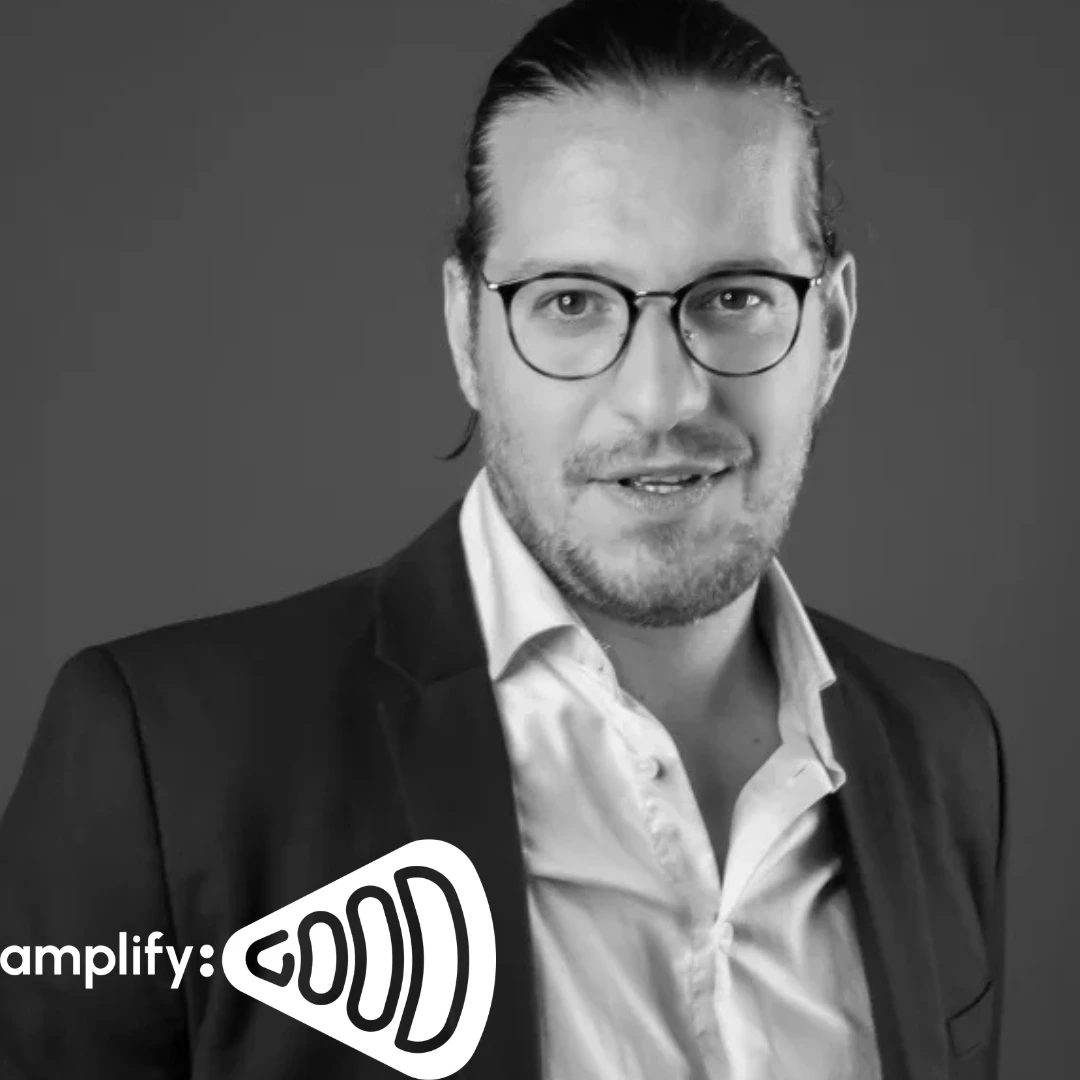
Sandor Madovy has a clear answer. As Founder and Managing Director of Amplify:Good, he leads an organic content agency built from the ground up around purpose-driven work. Having operated across more than 50 countries, Madovy and his international team work with progressive campaigns, NGOs, and mission-led organisations to turn values into visibility. They deploy authentic creators and content-as-a-service ecosystems to drive measurable impact on causes ranging from climate advocacy and social justice to European unity and democratic participation. Amplify:Good is also building the Good Creator Network, a curated cohort of values-aligned creators designed to move beyond transactional matchmaking.
In this interview, Madovy makes the case that authenticity is not a trade-off against performance, it is the mechanism behind it. He also explains why the industry's shift toward long-term partnerships is partly genuine, partly a premium product being sold, and what it actually takes to capture the real value of sustained creator relationships.
As influencer marketing has matured, how has the industry evolved on brand safety and performance? Is it genuinely maturing, or is there still a gap between words and actions?
It's genuinely maturing, but unevenly. More money in the space has raised the floor: brand safety now goes well beyond a basic background check. We're looking at values alignment, reputational exposure, and whether a creator's track record holds up to scrutiny over time, not just at the moment of signing.
On performance, the shift is just as real. Reach and impressions no longer close deals. Clients want conversion data, cost-per-action, and proof that the audience did something. Affiliate links, UTM parameters, creator-specific codes: these are table stakes when there's a product involved.
Where the gap persists is in values-led campaigns. You can't put a UTM code on civic engagement or brand perception. That's where the industry still struggles to speak the same language as the outcomes it's actually producing.
How do you approach creator selection at Amplify:Good? Does operating as a purpose-driven organisation change the way you evaluate creators?
Finding the right messengers for the right message is the hardest part of what we do -- and the most important. Authenticity isn't a nice-to-have; it's the prerequisite everything else is built on.
We turn down creators regularly. Not because of follower counts or engagement rates, but because of value mismatch. A creator who doesn't genuinely live the topic they're being asked to advocate for is a liability, not an asset.
For smaller creators especially, audience clarity matters more than audience size. One clear topic, one defined community. That focus benefits clients directly: a tight, loyal audience converts better than a large, passive one. Working with purpose-driven organisations sharpens this instinct; we're not optimising for eyeballs, we're optimising for resonance.
How do you balance values alignment with finding creators who will actually deliver results? Is it one versus the other?
It's not a trade-off, it's a sequence.
We start with values. Amplify:Good has a clear sense of where we stand on issues, and value alignment is non-negotiable from the first filter. We're not going to reverse-engineer the values to fit a creator we like the numbers on.
From there, we layer in performance and audience metrics, then assess the working relationship: how easy is it to collaborate, how do they respond to briefs, do they bring creative input or just execute? That last dimension matters more than people admit, especially for recurring work. A creator who is 20% less impressive on paper but brings genuine creative partnership will outperform a passive one every time.
Values first. Then performance. Then chemistry. In that order.
What are the biggest risks for brands when creator partnerships are misaligned — in terms of reputation, performance, and audience trust?
Performance risk is the most visible: a misaligned creator simply doesn't reach the intended audience. That's money wasted, and it's measurable.
But the reputational risk is far more damaging and far harder to undo. An audience can tell when a creator doesn't believe what they're saying. The cognitive dissonance doesn't just reduce campaign effectiveness, it sticks to the brand. In purpose-driven work especially, a forced or inauthentic partnership can actively undermine the credibility you're trying to build.
Our answer to both is the same: work with creators who already live the values. The match should feel inevitable, not manufactured. When it does, both the performance and the reputation take care of themselves.
There's a growing argument that what makes a creator "safe" — consistency, credibility, genuine advocacy — is the same thing that drives campaign performance. Does that hold up in practice?
Completely. And it's not a coincidence, it's causation.
Authentic voices are more persuasive because their followers have learned to trust their judgment. When a creator only promotes what they genuinely believe in, every recommendation carries weight. That's the compounding return on brand safety: you're not just avoiding risk, you're building a more effective channel.
The niche creators we work with are the clearest proof of this. A smaller creator with deep credibility in one specific topic will outperform a generalist with ten times the following because the audience is there for that topic, not just for the personality.
Long-term creator partnerships are increasingly the industry standard. Do they genuinely reinforce values and performance, or is it more complicated than that?
The honest answer is: it depends on how you structure it. A long-term contract alone doesn't drive results, audience fit and creative quality still do the heavy lifting. But sustained relationships, when built intentionally, unlock something a one-off campaign can't: earned trust between the creator, their audience, and the cause.
That's precisely why we're building the Good Creator Network as a curated founding cohort rather than an open marketplace. We're not matching creators to campaigns transactionally -- we're onboarding people who are aligned on values, topics, and working style, so that when a project lands, the collaboration is already grounded. That groundwork has real performance implications: briefing time drops, creative quality goes up, and audiences notice when a creator's advocacy is consistent rather than sporadic.
The sustained partnership trend is partly genuine, partly the industry selling a premium product. What we're trying to do is capture the actual value of it — continuity, alignment, and creative trust — without locking anyone into inflexible contracts for their own sake. Fair compensation, clear terms, and performance-based upside matter more than contract length. But the relationship underneath the contract? That's the asset.
Audience trust is often cited as the core asset in influencer marketing, but it's notoriously hard to quantify. How do you evaluate whether a partnership is building or eroding it over time?
We track performance rigorously across every piece of content, not just absolute numbers, but patterns. Are results stable or declining across posts? How does a creator perform compared to their own baseline, and compared to peers on the same campaign?
Sentiment analysis is where the real signal lives. Comment quality, reaction ratios, the nature of the conversation a post generates, these tell you things that reach and engagement rates don't. A post can perform well on paper while the comments tell a completely different story.
Trust erodes quietly before it collapses visibly. The monitoring has to be continuous, not just post-campaign.
About Kolsquare
Kolsquare is Europe’s leading Influencer Marketing platform, offering a data-driven solution that empowers brands to scale their KOL (Key Opinion Leader) marketing strategies through authentic partnerships with top creators.
Kolsquare’s advanced technology helps marketing professionals seamlessly identify the best content creators by filtering their content and audience, while also enabling them to build, manage, and optimize campaigns from start to finish. This includes measuring results and benchmarking performance against competitors.
With a thriving global community of influencer marketing experts, Kolsquare serves hundreds of customers—including Coca-Cola, Netflix, Sony Music, Publicis, Sézane, Sephora, Lush, and Hermès—by leveraging the latest Big Data, AI, and Machine Learning technologies. Our platform taps into an extensive network of KOLs with more than 5,000 followers across 180 countries on Instagram, TikTok, Twitch, Facebook, YouTube, and Snapchat.
As a Certified B Corporation, Kolsquare leads the way in promoting Responsible Influence, championing transparency, ethical practices, and meaningful collaborations that inspire positive change.
Since October 2024, Kolsquare has become part of the Team.Blue group, one of the largest private tech companies in Europe, and a leading digital enabler for businesses and entrepreneurs across Europe. Team.Blue brings together over 60 successful brands in web hosting, domains, e-commerce, online compliance, lead generation, application solutions, and social media.








.webp)




.webp)