📊 Kolsquare Budget Report 2026: Optimize Your Influence Budget



As France's creator market passed $10 billion, Europe's biggest creator economy event put AI search, social commerce, cross-border scaling and trust at the top of the brand agenda.
The global creator economy will be worth $217.3 billion in 2026, up 26.2% from 2025 and more than the entire video game industry, according to the Creator Economy Report 2026, unveiled at Paris Creator Week on Nov. 4.
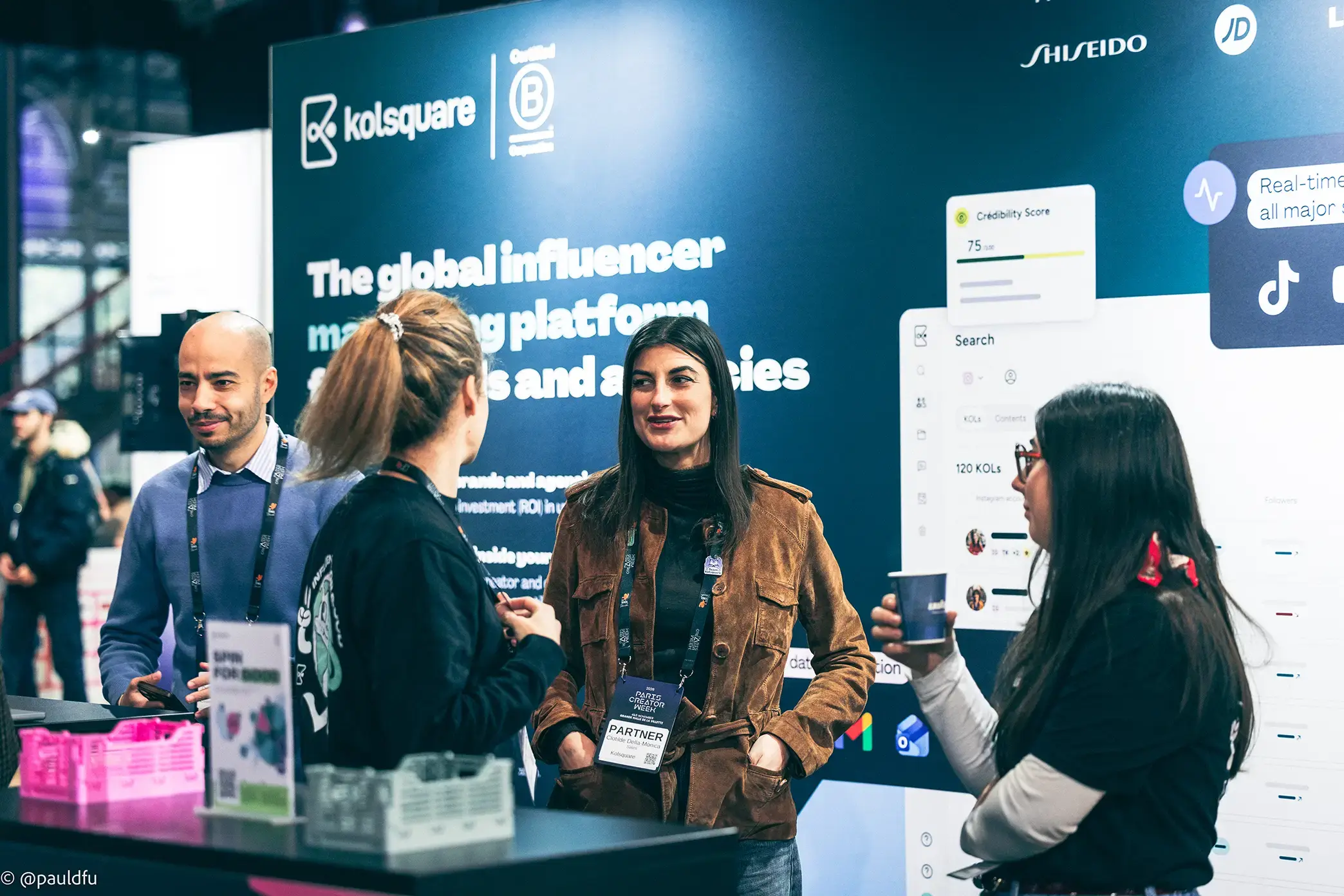
Billed as Europe's biggest creator economy event, the third edition of Paris Creator Week, held Nov. 4-5, outgrew Station F and moved to the Grande Halle de la Villette. Organizers expected more than 8,000 participants, up from 4,600 in 2025, including more than 3,000 creators, 300 speakers and 400 brands.
In a sign of the event's growing clout, global industry heavyweights attended, including Twitch CEO Dan Clancy, YouTube Shopping general manager Travis Katz and Pierre Amend, head of creator operations at TikTok Shop France. Representatives of global brands including LVMH, Google, eBay, Carrefour and SharkNinja spoke alongside creators including Tibo InShape (@TiboInShape on YouTube), Hugo Clément (@hugoclementk on Instagram) and U.S. YouTube Shopping star Mélissa Metrano (@melissametrano on YouTube).
AI, social shopping, scaling influencer programs and responsible influence dominated the two-day event, alongside tips, hacks and advice for creators on building healthy, sustainable businesses from their content.
The U.S. creator economy, valued at $69.8 billion (€62.2 billion), accounts for roughly a third of the global market. The French creator economy crossed the $10 billion mark (about €9 billion) for the first time, growing 23.7% in a year to rank seventh in the world and third in Europe, behind Germany ($12.6 billion) and the U.K. ($12.2 billion).
"Not a lot of businesses have double-digit growth. We have a 26% growth and it’s still accelerating," Paris Creator Week co-founder Marc Lesage-Moretti (@jokariz6803), told the conference.
"$217 billion is a bit more than the whole video game industry in the world. It’s a bit more than the GDP of Qatar," he said.
The annual growth rate of the global creator economy (defined as money spent on creator content via brand partnerships, platform ad revenue shares, subscriptions, tips, affiliate commissions and creator merchandise) is accelerating, from 18% in 2021 to 26% in 2026, and with the market expected to more than double in size to almost $450 billion by 2029. By 2033, if the forecast holds, it would pass $1.2 trillion, the size of today's entire global advertising market.
As influencer marketers rush to connect their tools to AI and leverage deeper data insights to drive impact, the conversation at Paris Creator Week moved from what AI can automate to how it changes the way shoppers find brands. Agencies and brands described AI agents that now source creators, write briefs and compile reports. Speakers also warned that shoppers increasingly ask ChatGPT, Gemini and Perplexity what to buy, and those answers rarely cite the Instagram and TikTok accounts where brands spend most of their creator budgets.
The workflow shift is already visible. On the panel "AI, Influence & Responsibility: Are We Ready for What's Next?" Jeanette Okwu, founder of Berlin agency Beyond Influence, described a September gifting campaign for a Korean beauty brand that needed 400 U.S. creators. With Claude acting as campaign manager alongside creator tools, her team sourced 30,000 profiles and contacted 23,000 in two weeks, while the human campaign manager was on vacation. "This was only possible with AI," she said.
Beauty box company Blissim, which operates in five European markets, built its own influence app with Claude. Because the brand sells only online, it can track which creator brought in which subscriber, at what cost and in which market. "Reporting, briefs, analyses, manual creator search: today it's 100% automated," said Marilou Bazoge, Blissim's influencer marketing manager, on the panel "Designing High-Impact Influencer Campaigns in the Age of AI," adding that the time saved is being reinvested in building and maintaining strong relationships with creators.
Fellow panelist Anis Ayari (@DefendIntelligence), an AI engineer and creator who advises French companies on their reputation in AI models, said too many European companies are still running pilots while new models ship every few weeks. "Stop thinking you have time," he said. "In France and in Europe, we need a very fast wake-up call."
All that efficiency comes at a cost. Content has never been cheaper or faster to produce, so it looks more and more alike across platforms, Kolsquare founder and CEO Quentin Bordage said as he opened the panel. When everyone has access to the same tools, the harder question for brands is how to get found when shoppers ask an AI model for a recommendation.
Justine Bachelot, creator partnerships manager at YouTube, said advertisers are waking up to the need to appear in AI citations. "Every client I talk to has the same problem," she said, summing up their reaction as "I'm not feeding my YouTube channel." Many now want to post more on their own brand channels and appear in creator videos too.
For now, traditional media dominate those answers. "Three-quarters of the content cited by AIs comes from media, from us," said Pierre-Etienne Boilard, deputy CEO of Reworld MediaConnect, which sells advertising for 80 French media brands, on the panel "From Influencers to LLMs: How GEO Is Redefining Creator Power." In his view, creators face "a new competitor for audience, and above all a new competitor for trust."
Video is the opening. "There are now two audiences when you produce a video: humans and AIs," said Olivier Reynaud, co-founder and CEO of AI video indexing startup Aive, who compared the moment to the early days of search engine optimization.
YouTube is where that matters most, said Fabienne Fourquet, co-founder and CEO of Spanish agency 2BTube. Her team tests brands with about 15 prompts per theme across five AI tools, then produces videos that answer those questions. For one luxury perfume brand, creator videos drew 200 times more views than its sponsored content. "I always say YouTube is Google, and it's 90% algorithm and 10% creativity," she said.
As European brands push influencer marketing to drive sales and conversions, the platforms came to Paris to sell the tools. YouTube Shopping launched in France the week before the event, and TikTok Shop marked its first year in France, Germany, Spain and Italy. Both pitched their shopping features hard to creators, in sessions including "YouTube Shopping Unboxed: Creators Share Their Secrets" and "Influence in the Age of Social Commerce." Videos and livestreams from creators now generate 50% of TikTok Shop's revenue, according to TikTok, while YouTube said global YouTube Shopping commissions more than doubled in the past year.
For brands, the shift changes who they hire. "We're no longer really looking at community size. We really try to find creators who have that ability to sell," said Thibault Luminet, e-commerce director at SharkNinja France. That meant handing over creative control. "We frame the substance, but the creator handles the form," he said.
Creators are adapting too. Mimibonsplans (@mimibonsplans on TikTok), who earns from TikTok Shop affiliate sales, said she had "become a real creative strategist." For Mélissa Metrano (@melissametrano on YouTube), a former accountant with almost 5 million YouTube subscribers, a video with 5 million views and one with 500,000 views in the same product category drove the same sales. "Metrics don't always equate to sales," she said.
Europe's creator economy is worth €36.5 billion in 2026, according to the Creator Economy Report 2026, well short of the U.S. at $69.8 billion. Much of the gap comes down to fragmentation. A brand running creator campaigns across Europe deals with 27 countries, dozens of languages and different national rules on ad disclosure, contracts and payments, while U.S. advertisers can plan for a single market. That makes it harder to build the long-running creator programs that are becoming the norm in the U.S.
On the Main Stage panel "From One Market to Five: Can Creator Marketing Scale Across Europe?" Claudia Fischer, managing director for Germany, Austria and Switzerland at creator agency Whalar, asked three brand leaders how they roll out creator marketing across countries. In all three cases, headquarters sets the framework while local teams and creators shape the execution.
Fischer drew out the panel's key messages for brands scaling across Europe:
At Google, the regional team behind Pixel phones standardizes how it reaches out to creators, how it contracts them and what brand safety guardrails apply in every country. Creative is another matter. The team has never run the same creative in two countries, and its Pixel launch campaign looked very different in France than in Germany. Creators get one shared briefing and time with a concierge team to learn the phone, then interpret it in their own way. "Nothing is scripted," said Kim de Ruiter, head of social and culture for platforms and devices at Google. Some ideas stay local. Google's partnership around U.K. reality show "Love Island" would not travel as a property, she said, but the deal model behind it could.
In Germany, eBay moved creators from supporting act to lead. For a 360-degree campaign launching a new business proposition, creators were the faces of TV, out-of-home, radio and social. "We brought creators from the edges of the media plan into the very heart of it," said Malaika Ewald, brand lead at eBay Germany. A strong global brand defines a few core ingredients, and each market decides how to "flex those and flavor them so that they authentically and relevantly connect with the people in the market," she said. Where she once would have insisted on German-speaking creators for her market, she now believes the more emotional the story, the further it travels.
Danish health care company Novo Nordisk, which works in a heavily regulated industry, launched a regional content series with five creators from five countries. Local teams pushed back on language, expecting German audiences to want German-speaking creators. Instead, the creators spoke English with their own accents, and audiences found that authentic. "We don't necessarily sell products, we sell stories," said Marta Nowotarska, head of consumer and patient engagement at Novo Nordisk.
Budgets are catching up slowly. Fischer asked whether brands now run five markets on the budget of one and a half. De Ruiter said social and creator marketing are taking a growing share of Google's marketing budget, while Nowotarska said the return-on-investment conversation remains tricky because creator campaigns rarely show a direct sale.
With France heading into its 2027 presidential campaign, trust ran through many conversations during the two-day event. Speakers from the state agency that tracks foreign interference, the advertising regulator and the creator community warned that the tools brands use to reach audiences can just as easily be turned against them. Paid influencer campaigns can hide who is really behind them, and AI deepfakes and avatars make it harder for audiences to tell what, and who, is real.
France's advertising self-regulator is using AI to keep up. ARPP's Responsible Influence Observatory now reviews more than 400,000 pieces of creator content, reading images, sound and context to spot undisclosed partnerships, up from about 30,000 with text-only tools, said Mohamed Mansouri, deputy managing director of ARPP, on the "AI, Influence & Responsibility" panel. AI handles clear-cut breaches well, such as a post promoting tobacco or alcohol, he said. "But for everything in the gray area, whether it's misleading or not, we need human judgment."
The EU AI Act adds new duties around deepfakes, including watermarking requirements for AI providers, Mansouri said. He also warned against small creators handing product promotion to virtual doubles. "By definition, this avatar has not tried the product, so he cannot promote the product," he said. Okwu said she expects licensed digital likenesses to spread, pointing to H&M's campaign built on licensed digital twins of models. "It just needs to be really clear that creators also get paid for lending their face to a brand," she said.
During the session "Influence and Interference: The Right Reflexes to Avoid Being Manipulated," Viginum, the French agency that tracks foreign digital interference, issued a sharp warning to creators ahead of France's 2027 elections. Anne-Sophie Dhiver, its deputy head, described how a campaign linked to Russia used influencers ahead of Romania's 2024 presidential election, which was later annulled. Big accounts were paid to post vague videos about "the future of Romania," while hundreds of smaller creators unknowingly pushed hashtags hinting at a candidate, until one hit ninth place on TikTok's global trends. "These foreign interference campaigns are digital marketing campaigns," Dhiver said. "As influencers, you are attractive targets."
Her advice centered on the brief. "If there's no transparency, if elements are opaque, be extremely wary, even if it looks very lucrative," she said.
Kolsquare was a major partner of Paris Creator Week 2026.
Kolsquare is Europe’s leading Influencer Marketing platform, offering a data-driven solution that empowers brands to scale their KOL (Key Opinion Leader) marketing strategies through authentic partnerships with top creators.
Kolsquare’s advanced technology helps marketing professionals seamlessly identify the best content creators by filtering their content and audience, while also enabling them to build, manage, and optimize campaigns from start to finish. This includes measuring results and benchmarking performance against competitors.
With a thriving global community of influencer marketing experts, Kolsquare serves hundreds of customers—including Coca-Cola, Netflix, Sony Music, Publicis, Sézane, Sephora, Lush, and Hermès—by leveraging the latest Big Data, AI, and Machine Learning technologies. Our platform taps into an extensive network of KOLs with more than 5,000 followers across 180 countries on Instagram, TikTok, Twitch, Facebook, YouTube, and Snapchat.
As a Certified B Corporation, Kolsquare leads the way in promoting Responsible Influence, championing transparency, ethical practices, and meaningful collaborations that inspire positive change.
Since October 2024, Kolsquare has become part of the Team.Blue group, one of the largest private tech companies in Europe, and a leading digital enabler for businesses and entrepreneurs across Europe. Team.Blue brings together over 60 successful brands in web hosting, domains, e-commerce, online compliance, lead generation, application solutions, and social media.
Influencer campaign budgets in 2026 range from a few hundred euros for micro-influencer activations to six-figure sums for multi-market enterprise programs, depending on creator tier, usage rights and scope. Brands now allocate between 20% and 30% of total marketing spend to creator collaborations, rising to as much as 50% among digital-first brands. Kolsquare, the European influencer marketing platform, helps brands plan and track this spend with built-in EMV and attributed-sales reporting rather than flat rate cards. Last reviewed October 2026.
UK influencer marketing spend has grown consistently in recent years: from approximately £375 million in 2020 to £577 million in 2021 (+65%), £701 million in 2022, and an estimated £809 million in 2023. Statista projects UK influencer marketing ad spend reaching £930 million in 2024 and continuing toward £1.3 billion by 2029. Last reviewed October 2026.
No, we don’t offer a pre-made influencer marketing budget template. However, you can easily create one tailored to your needs using insights and data from our tools:
By combining these resources, you can develop a data-driven template that aligns with your campaign goals and budget constraints.
Kolsquare offers free calculators that let brands and agencies estimate the cost of working with a specific creator. The Instagram rate calculator estimates pricing for sponsored posts and Stories based on an influencer’s follower count, engagement rate and estimated Earned Media Value (EMV); a TikTok rate calculator covers TikTok content the same way. Both are available on kolsquare.com without requiring sign-up. Last reviewed October 2026.
In the United Kingdom, influencer marketing budgets vary significantly across businesses. According to Kolsquare's recent report, UK companies spent an average of £849,000 on influencer marketing in the past year. However, this figure is elevated by substantial investments from larger corporations. The most common expenditure among UK businesses is considerably lower, with many allocating less than £250,000 annually to influencer campaigns. This average spend is notably below that of other European countries, highlighting a more conservative approach to influencer marketing within the UK market.
Creating a successful influencer marketing strategy requires a systematic, data-driven and creative approach,
Start by identifying your primary goals. Objectives should be specific, measurable, achievable, relevant, and time-bound (SMART). Examples include:
Defining clear objectives sets the foundation for every decision, from influencer selection to campaign performance metrics.
Then, focus on identifying the right influencers. Suitable influencer identification is critical for success. Key factors to consider include:
Pro Tip: Smaller influencers like micro-influencers (10K–100K followers) often offer a more personal touch. They also have niche audiences with higher engagement rates while still having good reach, making them ideal for cost-effective campaigns.
The next step is to develop authentic partnerships. Authenticity is the backbone of influencer marketing. Audiences value genuine recommendations over overtly promotional content. To foster this:
Then, focus on creating creative, authentic content. Content should align with your brand identity while resonating with the influencer’s audience. Strategies include:
Pro Tip: Incorporate trending formats, such as before and afters or “unboxing” content, which consistently perform well.
Next comes reporting and monitoring. Track campaign results to determine success and optimise future strategies. Focus on:
The final step is to ask yourself the following questions: what worked and what didn't? And how can that guide my future strategy?
No campaign is perfect from the start. Use insights from your performance metrics to:
Kolsquare’s most recent benchmark study is the State of Influencer Marketing in Europe 2025, published November 2025, based on a survey of 380+ senior marketers and directors across markets including the UK, France, Germany, Spain and Italy. It covers campaign strategy, platform usage, budget plans and compliance priorities market by market. Read the full report. Last reviewed October 2026.
The global influencer marketing industry reached an estimated $32.55 billion in 2025, according to Influencer Marketing Hub, up from $24 billion in 2024. Within Europe, the UK is the largest single market, growing at an estimated 29.5% compound annual rate through 2033. Kolsquare helps brands track and benchmark spend across this growth. Last reviewed October 2026.
Average influencer marketing spend varies enormously by company size: in Kolsquare’s most recent UK survey, the average was £849,000 annually, though that figure is skewed upward by a small number of large spenders — most UK businesses spend under £250,000 a year. Kolsquare helps brands of any size benchmark spend and plan budgets by campaign objective rather than company size alone. Last reviewed October 2026.
Charges per post depend on the influencer's tier, engagement rates, and the industry they operate in.
Here's a breakdown for Instagram:
TikTok rates are generally higher due to its strong engagement and virality potential. For instance, TikTok nano-influencers may charge £100–£300 per post, while mega-influencers can command £15,000+ per campaign.
Factors that influence pricing include:
To estimate influencer costs on platforms like Instagram and TikTok, tools such as Kolsquare’s Calculator offer precise insights into how much an influencer will charge based on follower count, engagement rates, and platform benchmarks. Simply input the influencer's handle, and the calculator will give you an estimate. This helps you plan budgets effectively and removes some of the guesswork.
Your influencer marketing budget should follow your campaign goals rather than a fixed formula: brand awareness, lead generation and conversion campaigns call for different spending levels and channel mixes. In Kolsquare’s most recent survey of European brands, [X]% allocated between €100,000 and €249,000 annually to influencer marketing, and [Y]% planned to increase that spend the following year. Kolsquare helps brands benchmark budget against peers and track ROI once spend is committed. Last reviewed October 2026.
A favourable ROI in influencer marketing typically means earning more than £5 for every £1 spent. However, returns can vary based on campaign objectives and execution.
It will also vary depending on the industry, as engagement rates tend to fluctuate. For example, technology engagement rates are higher than media and entertainment.
However, data from Influencer Marketing Hub suggests that 84.8% of marketers consider influencer marketing effective, indicating its potential for substantial returns.
Influencer marketing costs can vary widely depending on the influencer’s size, platform, and the type of content you need. It's contortionist-level flexible.
The first consideration is follower count. Though a superficial metric in many ways, smaller audiences tend to command lower influencer payments. Nano-influencers (1,000–10,000 followers) charge about £10–£100 per post, while micro-influencers (10,000–100,000 followers) may cost £100–£5,000 (these creators are highly sought after, so there's a gulf between prices). And macro-influencers (500,000–1,000,000 followers) will charge £5,000–£10,000. Mega-influencers with over 1 million followers? You’re looking at £10,000 or more--sometimes much more.
The social media platform you use will also impact costs. For example, TikTok creators will have different expectations than Facebook creators.
Currently, Instagram is the go-to for UK marketers. The Kolsquare State of Influencer Marketing report found that 89% of brands running influencer campaigns opt for Instagram, which is more than Facebook (72%), TikTok (67%), and YouTube (63%). This means that Instagram creators are able to push prices up.
The format of content also matters. For example, if created by the same influencer, a 10-minute YouTube video will cost more than a 30-second Instagram Reel, which will, in turn, cost more than a photo posted on Facebook. Creators put great effort into their posts and should be remunerated accordingly.
However, some influencer's content takes longer to make than others. For example, if a brand wants an artist creator to paint a large canvas for the ad, it will likely cost more than a short product review.
But these elements don’t tell the whole story. Influencers with high engagement rates and more credible audiences are also highly desirable. With strong communities of people who genuinely trust them, these creators will likely bring better results. They will also approach collaborations cautiously, only aligning with brands they truly resonate with. The rise of these expert creators on platforms like YouTube and Instagram has made the industry more credible and presents a fantastic opportunity, but it will be more costly.
However, you can also adjust costs depending on your chosen campaign. For example, a gifting strategy doesn't require influencer payments; you just send free products to influencers in exchange for a post. On the other end of the spectrum, working with brand ambassadors, who create regular posts and become entrenched with the brand, could require you to invest £5,000+ per month per influencer.
However, although more casual collaborations shield the blow to your overall budget, they may feel superficial to followers.
Lastly, there are the operational complexities and costs. Finding influencers with genuine engagement capable of catapulting your brand to new heights requires careful analysis. Once that decision is made, there is still the need to negotiate rights, review content, manage the relationships, and develop reports. Without a large team with ample free time, the complexity can cause costs (and stress levels) to spiral.
This is where Kolsquare steps in. We simplify influencer marketing by offering a database for finding authentic influencers fast, campaign management, and spreadsheet-free reporting, all on one platform!
How much influencers charge depends on the industry, type of content, and desirability. They may even lower their fees during quiet times when there is little interest.
Influencers charge varying amounts per post depending on their follower count, engagement rates, content quality, and location. For sponsored posts, nano-influencers (1,000-5,000 followers) typically charge between £10 and £100 per post, while micro-influencers (5,000-100,000 followers) ask for £100 to £1,000. Macro-influencers (100,000-1m followers) command £1,000-£10,000 per post, while mega-influencers and celebrities (over 1 m followers) can charge £10,000 or more.
Check out the Kolculator for more precise estimates. Just input the creator's handle and click "Kolculate!"
There is no universal price that influencers with 100k followers charge per post. However, in general, they will charge between €2k and €7k for content.
One particular factor is earned media value (EMV), which estimates how much the buzz from an influencer campaign would have cost to generate through traditional marketing channels. EMV is based on metrics such as content engagement, impressions, and the type of audience reached. It affects influencer compensation by providing a rough idea of the noise an influencer can generate. As a result, influencers with around 100k followers charge varied amounts.
Let's compare two influencers with 100k followers:
As you can see in each case study, influencer compensation varies due to metrics beyond follower counts.
Every month we gather the top data, trends, and analysis on the creator economy. Only what matters. Straight to your inbox
L’essentiel, directement dans votre boîte mail.