Ready to elevate your marketing game with Influencer Marketing?
Our team of experts will be happy to show you our influencer platform in action and discuss your individual needs and aspirations.


The Digital Fairness Act would replace 27 national approaches with one EU-wide rulebook for creator content, from gifted products to protections for minors.
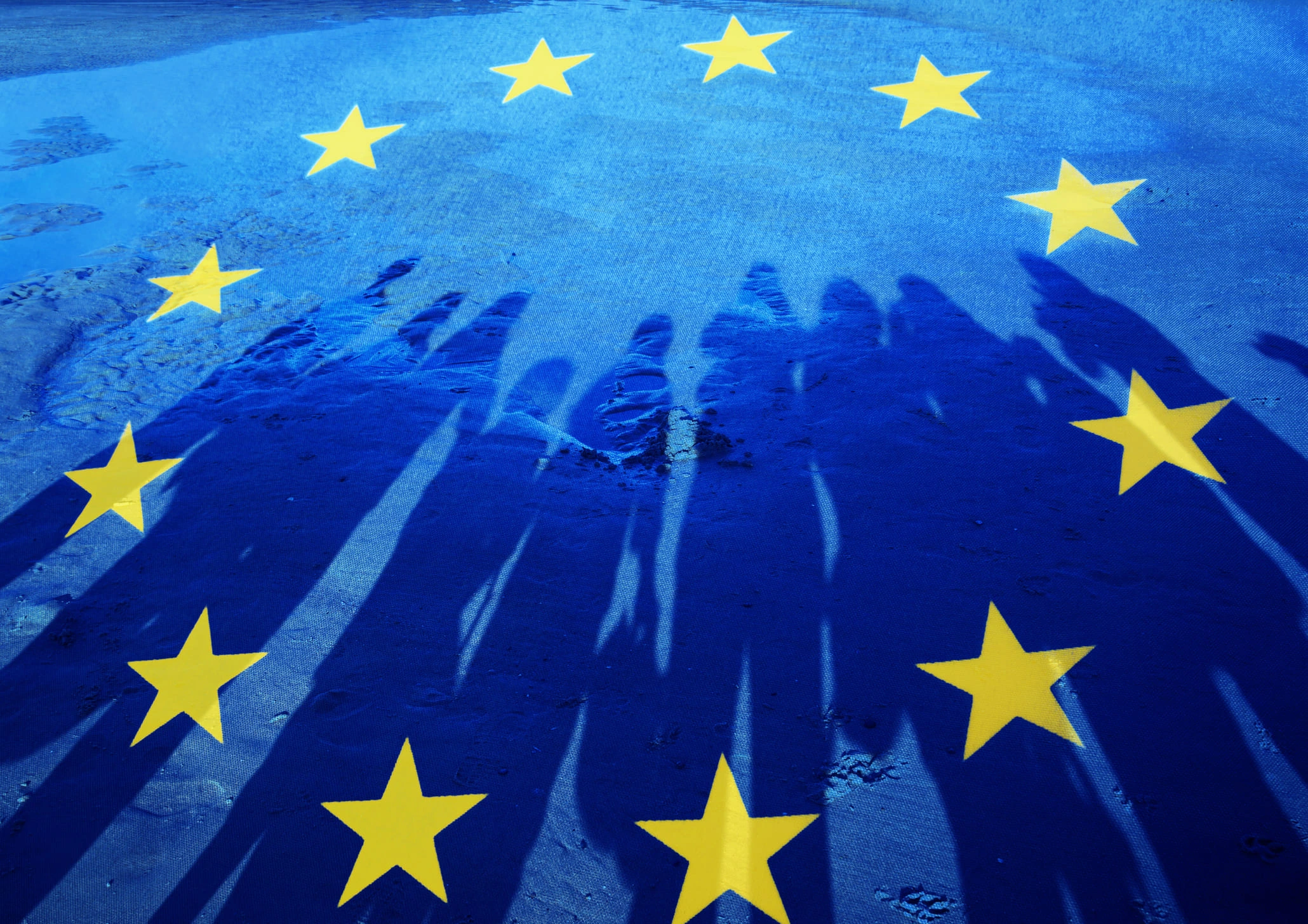
New consumer rules proposed by the European Commission would give Europe's influencer marketing industry a single legal framework for the first time, forcing every sponsored post in the 27-country bloc to carry a mandatory label and making brands accountable for the creators they pay.
Three years after France enacted the bloc's first comprehensive influencer law, the proposed Digital Fairness Act (DFA) would turn the 2005 Unfair Commercial Practices Directive into a regulation that applies word for word in every member state. The 2005 directive bans misleading and aggressive sales practices toward consumers, such as false claims and high-pressure selling. The DFA would carry that into the digital economy, adding rules on dark patterns, addictive design, personalized ads and pricing, subscription traps and in-game currencies alongside the influencer provisions.
The penalties are steep, and they would cover breaches of any DFA rule, including the influencer provisions. Under a companion proposal to revise the Consumer Protection Cooperation Regulation, the Commission could take on cases that harm consumers in at least two-thirds of member states, representing at least two-thirds of the EU population, and fine companies up to 6% of worldwide annual turnover. National authorities would handle smaller cases, and small and medium-sized businesses would stay outside the Commission's direct reach.
"If the DFA passes in its current form, six concrete rules change for creator marketing in Europe. Brands and agencies must contractually ensure the creator complies. Platforms' native disclosure functions (Instagram paid partnership, TikTok sponsored, etc.) become mandatory," says Kolsquare founder and CEO Quentin Bordage.
For influencer marketers, a pan-European campaign would run on one disclosure standard. Checking creators' posts would become a legal duty for the brand, and a gifted product would count the same as a paid deal.
The influencer rules sit in Article 11 of the Commission's proposal. Six changes stand out for brands and agencies:
The proposed rules would make the whole influencer marketing value chain accountable for the first time across the 27-member bloc. From gifting to influencer trips, live events and affiliate marketing, the rules would clarify what are currently gray areas in national frameworks that address influencer marketing.
"The text defines the collaboration as a whole, not the influencer. That's an important distinction and a smart move because it sidesteps the complicated debate about who qualifies as a creator," says Bordage. "It also makes the platforms' native disclosure tools mandatory, and a paid post can no longer hide behind 'I'm just sharing.'"
The DFA's influencer provisions have been on the Commission's agenda for several years. When EU and national consumer authorities screened 576 influencers in 2024, for example, 97% posted commercial content, but only 20% systematically disclosed it as advertising.
National checks told the same story. France's consumer watchdog, the DGCCRF, found nearly half of 310 influencers in breach in 2022 and 2023, CB News reported. In Italy, the competition authority fined companies linked to Chiara Ferragni and cake maker Balocco about €1.5 million in 2023 over a pandoro campaign that misled buyers about a hospital donation.
Countries and the industry responded separately. France passed Europe's first influencer law in 2023, Spain and Italy followed with their own rules, and ad self-regulators launched responsible influence certificates now offered in 11 countries. The DFA would pull that patchwork into one rulebook.
Consumer groups have pressed for clearer labels ever since.
"People expect that influencers provide genuine advice or tips, not to be quietly sold the latest anti-wrinkle cream," said European Consumer Organisation (BEUC) Director General Agustín Reyna in a statement. "If someone is promoting products on social media, it should be clearly stated. Advertising should always be labelled, so consumers know when they are being marketed to."
The influencer rules are one part of a wider package that also targets manipulative app design and subscription traps. The Commission estimates the DFA could save EU consumers up to €13.7 billion a year.
In France, where the country's influencer law has been in place since 2023, creators are already required to tag paid posts "publicité" or "collaboration commerciale". The law as it stands also makes brands jointly liable with the creators they hire.
"French marketers will have relatively little to adapt, as the 2023 law is already close," says Bordage, adding that France's written-contract requirement for collaborations above €1,000 may be superseded by the DFA's broader wording, which allows compliance "by contract or other appropriate means".
Elsewhere, the patchwork is thicker. Spain adopted a royal decree in 2024, Italy introduced a binding code in July 2025 and the Netherlands has its own social media advertising code, NetInfluencer reported. A brand running one campaign in Paris, Madrid and Milan today follows three sets of rules.
"More adjustment will likely be needed elsewhere. In Spain, for example, current obligations apply differently or to specific creators," says Bordage.
The industry started training creators long before Brussels drafted the DFA. About 10,000 creators have completed the European Advertising Standards Alliance's AdEthics program, now available in 11 countries, and EASA says 80% of them went on to be certified.
The DFA never mentions these certificates, which are not a legal requirement and were created by advertising self-regulators.
Bordage sees the proposal as a step toward a more professional sector, something Kolsquare supports through the European Influencer Marketing Alliance and its national member associations.
"Clarification and harmonisation are on the way, which is a necessary step toward greater professionalisation of our industry," says Bordage. He is wary, though, of overlap with the Digital Services Act and the Audiovisual Media Services Directive, which already cover parts of creator content.
"Legal duplication would serve no one and create grey areas platforms will exploit," he says.
Some ad industry groups were more skeptical of the package as a whole. "Fairness does not come from another layer of regulation," said Hannes Wurzwallner, president of IAB Austria, as reported by Trending Topics. The U.K.-based Influencer Marketing Trade Body had warned in its 2025 consultation response to the DFA that new rules risked "duplicating laws," according to an IMTB statement.
The proposal has only just started the EU's ordinary legislative procedure, in which the European Parliament and the Council of the EU must each agree a position before settling on a final text. No EU institution has set a date for adoption. Between 2019 and 2024, laws agreed at first reading took some 17 months before adoption, and those that went to a second reading took 39 months, according to the European Parliament's research service (EPRS). A first-reading deal on the DFA would put adoption around spring 2028, with the rules applying after a transition period.
Kolsquare is Europe’s leading Influencer Marketing platform, offering a data-driven solution that empowers brands to scale their KOL (Key Opinion Leader) marketing strategies through authentic partnerships with top creators.
Kolsquare’s advanced technology helps marketing professionals seamlessly identify the best content creators by filtering their content and audience, while also enabling them to build, manage, and optimize campaigns from start to finish. This includes measuring results and benchmarking performance against competitors.
With a thriving global community of influencer marketing experts, Kolsquare serves hundreds of customers—including Coca-Cola, Netflix, Sony Music, Publicis, Sézane, Sephora, Lush, and Hermès—by leveraging the latest Big Data, AI, and Machine Learning technologies. Our platform taps into an extensive network of KOLs with more than 5,000 followers across 180 countries on Instagram, TikTok, Twitch, Facebook, YouTube, and Snapchat.
As a Certified B Corporation, Kolsquare leads the way in promoting Responsible Influence, championing transparency, ethical practices, and meaningful collaborations that inspire positive change.
Since October 2024, Kolsquare has become part of the Team.Blue group, one of the largest private tech companies in Europe, and a leading digital enabler for businesses and entrepreneurs across Europe. Team.Blue brings together over 60 successful brands in web hosting, domains, e-commerce, online compliance, lead generation, application solutions, and social media.
Every month we gather the top data, trends, and analysis on the creator economy. Only what matters. Straight to your inbox
L’essentiel, directement dans votre boîte mail.