Log in

English

×
![Image affichée dans la lightbox]()
Influence 2026: creativity, performance and the end of the classic funnel
The influencer market is not slowing down, it is transforming.
Between the rise of social selling, the growing importance of UGC, increasingly demanding audiences, and the questioning of the traditional funnel, the rules of the game are changing fast. For brands, the challenge is no longer simply to be visible, but to produce content that is authentic, high-performing and credible.
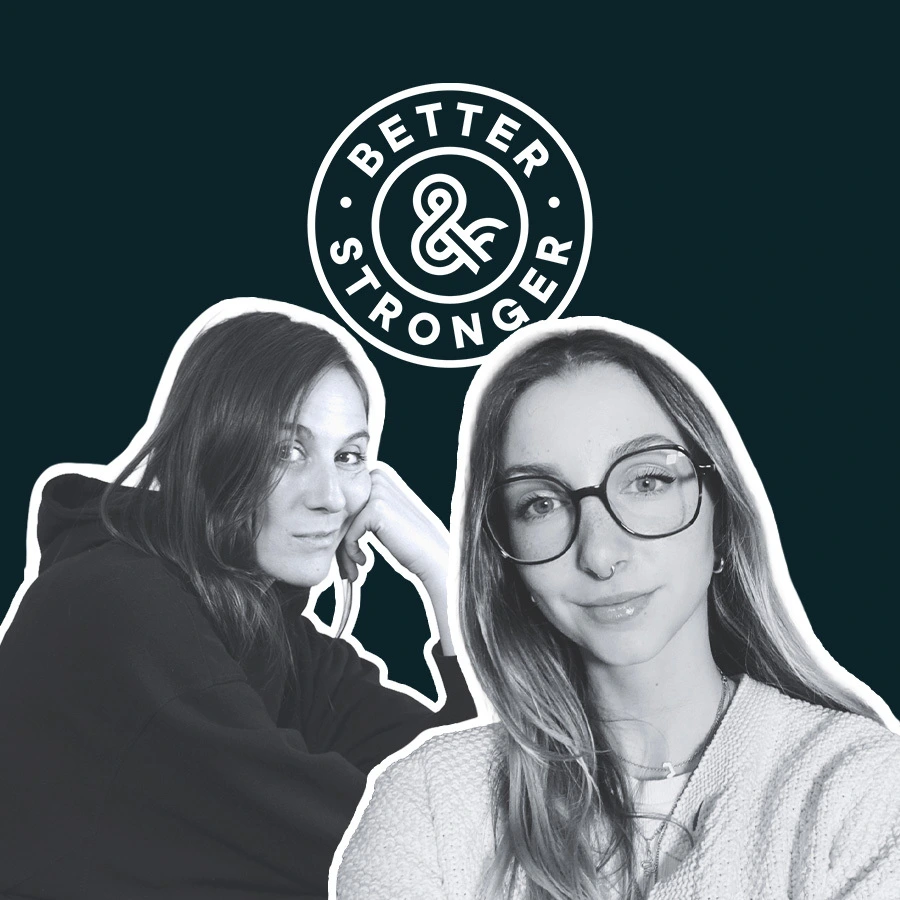
In this interview, Fanie Genovese, Head of Social Media, and Clémence Pluijm, Social Media Manager at Better & Stronger, an agency specialising in social media and influencer strategy, share their view of the French market. They describe a more mature, more demanding but also more complex ecosystem, where creativity and performance no longer oppose each other, and where UGC is becoming a central strategic lever.
Posted on
March 23, 2026
What are the key trends and challenges for influencer marketing in France today?
Fanie Genovese: The market is increasingly splitting in two major directions.
The first is strongly focused on creativity. Here we are talking about creators in the broad sense. The term “influencer” now covers very different profiles: lifestyle creators, but also highly niche educators who build a real economy around their content within their specific field. These profiles develop a genuine vision and strong storytelling, and they continue to build their value on that creative capacity.
The second direction is linked to the massive rise of social selling and social shopping. We are seeing another type of profile emerging, building their community around a much more conversion-driven logic. Their influence relies more on their ability to generate sales, with an approach that can resemble teleshopping, filtered through their personality and their curatorial power.
These are not two completely separate worlds. Highly creative creators can promote products, and social selling profiles can be inventive in how they present them. But they are still two different economies, with distinct value logics.
I would also put these trends into perspective with the massive arrival of artificial intelligence. Platforms like Instagram, TikTok or YouTube remain “creator first” and continue to reward authentic storytelling. This creates a form of resistance to AI-generated content or fake personalities. On the other hand, for profiles that are very performance and sales driven, AI can become an accelerator to optimise content designed to convert.
Clémence Pluijm: I would add another dimension: the growing expectations of audiences.
Already at the start of this year, we can see a very clear difference in content quality. Consumers are far more demanding. We are no longer simply talking about “influence” as we did in the era when reality TV personalities sold products through stories. We are truly talking about creators with a vision.
Today, we are looking more to collaborate than to impose. We seek profiles that stand out, that bring something innovative and that tell a story. Even with formats such as carousels, every slide must say something, create a hook and make people want to discover what comes next. We are no longer in a simple product placement logic or a basic affiliate link without storytelling.
There is also market saturation, with a huge number of profiles ranging from nano to macro. The battle for attention is stronger than ever, which naturally pushes towards higher quality and stronger storytelling.
Does this increased demand mean brands need to give up more control over content?
Fanie Genovese: Yes, and that is a real point of friction.
What attracts brands to influencer marketing, beyond performance, is also the economic logic. Compared with a traditional advertising campaign, the costs are very different. A national TV campaign involves extremely high budgets: agencies, creatives, production, sets, travel, media buying. We are talking about tens or even hundreds of thousands of euros before the campaign even airs.
With influencer marketing, you are in a way outsourcing the creative production. Whether it is a creator with several million followers or a micro creator with 2,000 followers, you benefit from turnkey content produced in their universe, distributed to their community, often at a lower cost than a traditional campaign.
But for that to work, the brand has to accept an external perspective. It has to collaborate rather than smooth out the message. If the brand is willing to do that, it wins across the entire process: lower production costs, organic distribution through the creator’s community and faster execution.
However, this does not mean abandoning branding. It would be a strategic mistake to rely only on influencer marketing. A brand must continue to define its own vision and editorial line. Influence is a powerful lever, but it cannot be the only strategy.
Should we still think about influencer marketing using the traditional funnel?
Clémence Pluijm: This is something we often discuss with our clients. The traditional funnel — top, middle, bottom — is becoming less and less relevant as we know it.
Today, content can convert at the very first exposure. Someone may see a piece of content once, at the right moment, through the right creator and with the right wording, and buy immediately. In other cases, it might take fifteen exposures before the purchase happens.
Both realities coexist. We have to work with that. It is not a theoretical desire to “reimagine” the funnel, it is the market that is forcing this reshaping. If we refuse to accept it, we miss opportunities.
How can the impact of influencer marketing be measured in this context?
Fanie Genovese: I actually think it is less complicated than people say. We already have a huge number of KPIs.
The real question is always: what are our objectives and what resources are we putting behind them? Measurement only comes afterwards.
Some brands want to connect specific content directly to sales using codes or tracked links. Others, particularly more established brands, will focus more on share of voice, engagement, EMV, or the share of traffic coming from social media.
The level of granularity depends on the resources and the strategy. It is not about inventing new KPIs at all costs, but about choosing those that make sense in relation to the objectives.
The real challenge lies in understanding models that are evolving very quickly. Tools have become increasingly automated, especially on the paid side. Human intervention is now mainly focused on the creation and production of assets. Strategic thinking needs to evolve accordingly.


What role does UGC play in your strategies today?
Fanie Genovese: Today, UGC allows for fast, efficient and authentic production. Whether you work with a creator with millions of followers or with a micro profile, you benefit from turnkey content produced within their universe and distributed to their community.
Even from a budget perspective, it often remains more competitive than traditional advertising production, while offering a very strong impact.
Clémence Pluijm: This is also where the funnel logic becomes blurred.
We can use UGC content initially designed for top or middle funnel objectives and see it convert directly when used in paid campaigns. We see this in sponsored campaigns: some content that performs well organically becomes an excellent conversion lever.
What works today is content that is authentic, well targeted and distributed at the right moment. UGC becomes a strategic pillar because it can respond to several objectives at once: visibility, engagement and performance.
Is there a “mistake” brands should avoid when using UGC?
Fanie Genovese: The main thing to avoid is treating people as if they were naïve.
The era of fake customer testimonials is coming to an end. In sectors such as cosmetics, wellness or food supplements, consumers have become very vigilant. They compare, verify and read reviews. With AI and comparison tools, it is extremely easy to cross-check information.
Fake customer feedback and artificial content are a very short-term strategy. It may work once or twice, but trust erodes quickly.
Clémence Pluijm: However, almost anything is possible with UGC, as long as it is coherent.
You have to align the brand, the product, the campaign, social media trends and above all the person embodying the message. It is no longer about putting words in someone’s mouth, but about creating real consistency between the creator’s universe and that of the brand.
Fanie Genovese: With the increase in time spent on social media, the rise of AI and the algorithms that constantly need to be fed, it will become very difficult for brands not to integrate influencer marketing or UGC content creation into their social media and marketing strategies.
For reasons of production speed, efficiency, cost and above all to win the battle for attention, I do not see how brands could continue without it.
About Kolsquare
Kolsquare is Europe’s leading Influencer Marketing platform, offering a data-driven solution that empowers brands to scale their KOL (Key Opinion Leader) marketing strategies through authentic partnerships with top creators.
Kolsquare’s advanced technology helps marketing professionals seamlessly identify the best content creators by filtering their content and audience, while also enabling them to build, manage, and optimize campaigns from start to finish. This includes measuring results and benchmarking performance against competitors.
With a thriving global community of influencer marketing experts, Kolsquare serves hundreds of customers—including Coca-Cola, Netflix, Sony Music, Publicis, Sézane, Sephora, Lush, and Hermès—by leveraging the latest Big Data, AI, and Machine Learning technologies. Our platform taps into an extensive network of KOLs with more than 5,000 followers across 180 countries on Instagram, TikTok, X (Twitter), Facebook, YouTube, and Snapchat.
As a Certified B Corporation, Kolsquare leads the way in promoting Responsible Influence, championing transparency, ethical practices, and meaningful collaborations that inspire positive change.
Since October 2024, Kolsquare has become part of the Team.Blue group, one of the largest private tech companies in Europe, and a leading digital enabler for businesses and entrepreneurs across Europe. Team.Blue brings together over 60 successful brands in web hosting, domains, e-commerce, online compliance, lead generation, application solutions, and social media.
Author



FAQ
What are the 4 M’s of influencer marketing?
The 4 M’s provide a framework for structuring campaigns. They are make, manage, monitor and measure campaigns.
- Make: Define objectives and design business models that link influencer content to growth.
- Manage: Handle campaign management, from contracts to UTM parameters that track website traffic.
- Monitor: Watch how the campaign progresses without over-reliance on vanity metrics.
- Measure: Assess performance through engagement, conversions, and customer acquisition cost.
For first-time campaigns, the 4 M’s act as a checklist. They keep teams aligned, reduce wasted spend, and ensure influencer activity ties back to measurable business outcomes.
What are the 3 Rs of influencer marketing?
The three Rs of influencer marketing campaigns are reach, relevance and resonance. They help brands create effective campaigns that truly impact their target audience.
Let's break down the three Rs of influencer marketing:
- Reach: Selecting a few influencers with substantial followings or many influencers with small followings ensures your message spreads far and wide. The broader your reach, the more visibility your campaign will have.
- Relevance: It's essential to choose influencers whose content aligns closely with or complements your brand and appeals to your target audience. Relevance should also include which platform you choose to launch your campaign on, whether that's Instagram or YouTube.
- Resonance: Craft campaigns that deeply connect with the audience on an emotional or personal level. Resonance fosters genuine interest, encourages interaction, and builds long-term loyalty, turning followers into dedicated customers and brand advocates.


.webp)




NEXT IN INFLUENCE
The must-read newsletter for influencer marketers
Every month we gather the top data, trends, and analysis on the creator economy. Only what matters. Straight to your inbox
L’essentiel, directement dans votre boîte mail.
.webp)